
CASK STRENGTH DAILY
Bourbon History
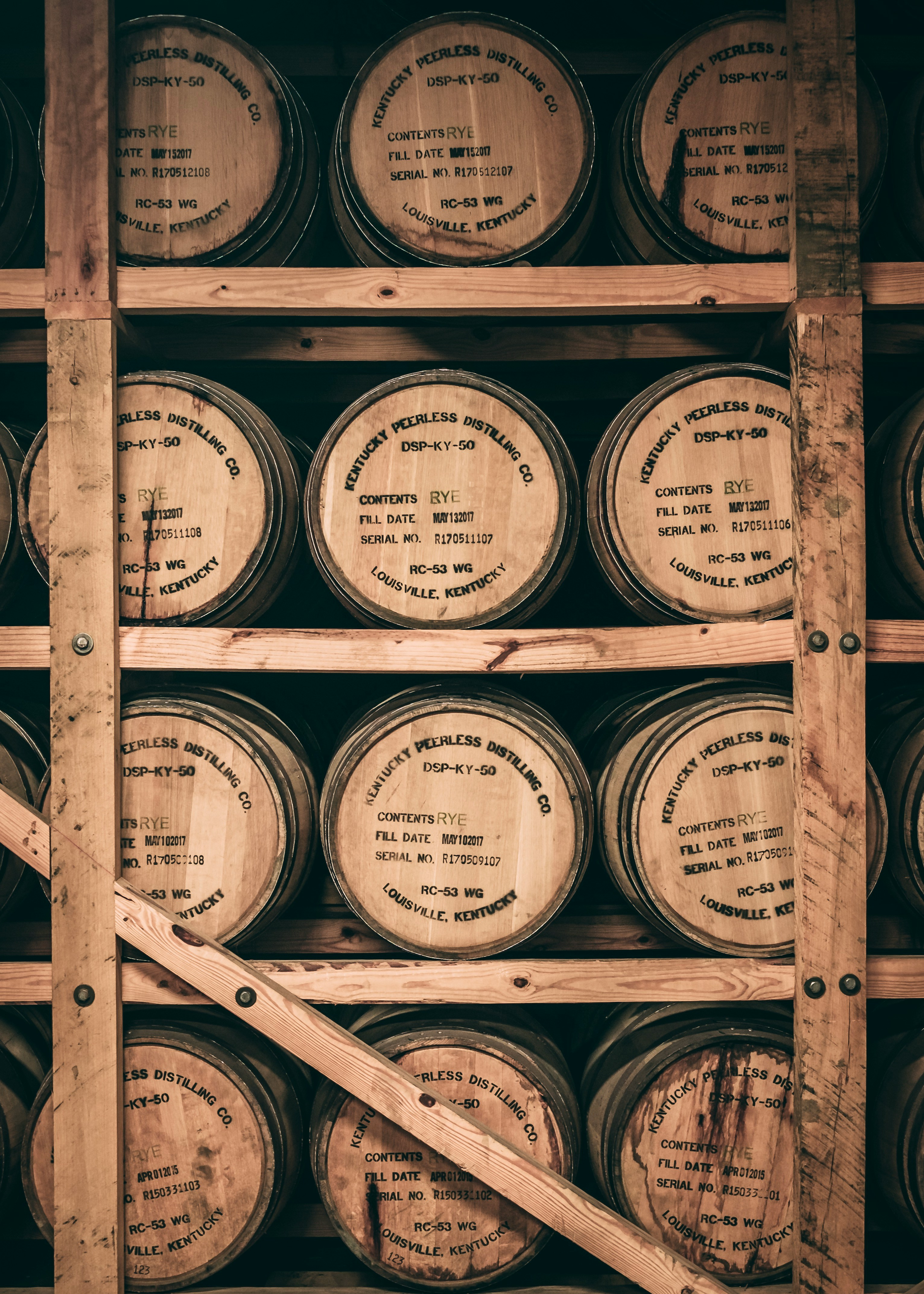
Bourbon and rye whiskey grew alongside the United States itself, shaped by agriculture, migration, technology, regulation, Prohibition, changing consumer tastes, and generations of distillers. From frontier farmers turning surplus grain into whiskey to today's globally recognized American whiskey industry, this history explains not only where bourbon came from, but why it is made the way it is today.
Frontier Era
- Late 1700s
Frontier Roots & the Corn Surplus
After the Revolution, Scots-Irish, English, and German settlers pushed west into what became Kentucky County in 1780. Virginia issued 400-acre "corn patches" to anyone who built a cabin and planted corn, and the region’s limestone-filtered water; naturally rich in calcium, free of iron; made it ideal ground for grain and distillation. Corn yielded heavily, but hauling raw grain over the mountains to eastern markets was impossible; distilling it into high-proof whiskey turned a bulky, perishable crop into a durable trade good that functioned as frontier currency.
- 1785
The Bourbon Name
Old Bourbon County, formed in 1785, was named for the French royal family in gratitude for their support in the Revolutionary War. When barrels of local whiskey were floated down the Ohio and Mississippi to New Orleans, those stamped "Old Bourbon" earned a reputation for distinct sweetness and color from the long voyage; and drinkers began asking for "that bourbon whiskey" by name.
- 1791
The Whiskey Rebellion
Treasury Secretary Alexander Hamilton’s Federal Whiskey Excise Tax of 1791, levied to pay down war debt, triggered an armed revolt among Pennsylvania and Maryland farmers. Federal crackdowns pushed distillers further southwest across the Ohio River into Kentucky, where tax collectors rarely ventured; seeding the region’s distilling density for generations to come.
- 1830s
Dr. James C. Crow & the Science of Whiskey
At the Old Oscar Pepper Distillery; now the site of Woodford Reserve; Scottish chemist Dr. James C. Crow brought laboratory rigor to what had been an inconsistent craft. He applied hydrometers, saccharometers, and thermometers to monitor fermentation, and perfected the Sour Mash The industry-standard process where acidic backset from a previous run is added into the fresh mash to control bacteria and ensure consistent pH. Learn more process: recycling a portion of spent stillage from a prior run into each new batch to control pH and suppress bacterial growth, ensuring consistent flavor run after run.
- Mid-1800s
The Column Still
The commercial adoption of continuous column stills in the mid-19th century allowed industrial-scale distillation, replacing the small, labor-intensive copper pot stills that had defined production up to that point.
- 1870
George Garvin Brown & Sealed Bottles
As railroad expansion brought a wave of adulteration; rectifiers cutting whiskey with neutral alcohol and additives like prune juice, tobacco spit, and even sulfuric acid to fake age; George Garvin Brown founded Brown-Forman and began selling Old Forester exclusively in sealed glass bottles. It was a direct guarantee of purity: buyers could finally trust that what left the distillery was what arrived in their glass.
Regulation & Purity
- 1897
The Bottled-in-Bond Act
Spearheaded by Colonel Edmund Haynes Taylor Jr. and Treasury Secretary John G. Carlisle, the Bottled-in-Bond Act became one of America’s earliest federal consumer-protection laws. To carry the green tax stamp, a whiskey had to come from a single distiller at a single distillery in a single season, age at least four years in a federally supervised warehouse, and bottle at exactly 100 proof; the Bottled-in-Bond (BiB) A federally regulated standard requiring single-distiller, single-season whiskey aged at least 4 years in a bonded warehouse and bottled at exactly 100 proof. Learn more standard still in use today.
- 1906–1909
The Pure Food and Drug Act & the Taft Decision
The Pure Food and Drug Act of 1906 set the stage, and in 1909 President William Howard Taft settled a bitter industry dispute by drawing clear legal lines between straight whiskey, blended whiskey, and neutral spirits; the first federal framework for what could honestly be called whiskey.
- 1920–1933
The Medicinal Prohibition Era
The 18th Amendment and the Volstead Act shut down legal distilling nationwide from 1920 to 1933. Only six companies; including Brown-Forman and the American Medicinal Spirits Company; held federal permits to sell existing stocks as medicinal whiskey, prescribed by doctors for ailments from anemia to influenza. Hundreds of independent family distilleries, proprietary yeast strains, and heritage grain recipes disappeared forever.
- 1933
Repeal & Consolidation
The 21st Amendment repealed Prohibition, but the landscape that emerged was far more consolidated than the one it replaced; dominated by corporate powerhouses like Schenley, National Distillers, and Seagram rather than the family operations lost over the preceding thirteen years.
- May 4, 1964
America's Native Spirit
Congress recognized bourbon as "a distinctive product of the United States," cementing federal standards under 27 CFR § 5.143: made in the U.S., a Mash Bill (Grain Bill) The recipe of raw grains milled and cooked for fermentation, defined by its dominant grain -- corn for bourbon, rye for rye whiskey. Learn more of at least 51% corn, distilled to no more than 160 proof, entered into a new Char Level (1 through 4) The duration of open flame applied to a barrel's interior, from a light 15-second Level 1 to a 55-second Level 4. Learn more at no more than 125 proof, bottled at 80 proof or higher, and free of any added coloring, flavoring, or blending agents.
- 1970s–1980s
The Glut Era
Changing tastes saw American drinkers abandon dark spirits for vodka, gin, and light beer. Warehouses sat packed with aging, unsold barrels, and distillers slashed production, mothballed operations, or sold off hyper-aged barrels at a loss; bourbon’s lowest commercial point, and the ground from which its revival grew.
Modern Craft
- 1984
The Single Barrel Renaissance
Master distiller Elmer T. Lee, of the Ancient Age/George T. Stagg Distillery now known as Buffalo Trace, introduced Blanton’s; sourced from the center of Warehouse H and sold as the commercial market’s first single-barrel bourbon. It broke from decades of mass blending and proved drinkers would pay a premium for an individual barrel’s profile.
- 1988–1992
The Small Batch Era
In 1988, Booker Noe released Booker’s straight from the barrel at uncut, unfiltered cask strength. By 1992, Jim Beam had built that idea into the broader Small Batch Collection; Knob Creek, Basil Hayden, Baker’s; putting high-end American whiskey on standard retail shelves for the first time.
- 1996
Heritage Reborn: Woodford Reserve
Brown-Forman restored the historic Labrot & Graham distillery in Versailles, Kentucky, and launched Woodford Reserve in custom pot stills and sleek, flask-shaped bottles designed to compete directly with single malt Scotch on upscale back bars.
- 1999
The Kentucky Bourbon Trail
The Kentucky Distillers’ Association launched the Bourbon Trail with an initial cohort of major distilleries, borrowing the Napa Valley wine-country tourism blueprint to turn working plants into major tourist destinations.
- 2000–2002
The Cult of Buffalo Trace
Following the 1999 renaming of the George T. Stagg property to Buffalo Trace, the distillery launched the Buffalo Trace Antique Collection in 2000. Two years later, the Van Winkle family partnered with Buffalo Trace to distill and bottle Pappy Van Winkle, gradually shifting production away from the shuttered Stitzel-Weller facility.
- 2004–2008
The Craft Cocktail Renaissance
Speakeasy-style bars in New York, Chicago, and San Francisco; Milk & Honey, The Violet Hour; rejected synthetic mixers for pre-Prohibition classics like the Old Fashioned, Manhattan, and Boulevardier, reviving demand for high-rye bourbons and straight rye whiskeys. Meanwhile, sourced-whiskey producer Lawrenceburg Distillers Indiana, later MGP, became the quiet engine behind a wave of new independent brands able to enter the market without waiting years for their own stock to age.
- 2012–2015
The Allocation Crisis
Barrels filled during the late-2000s recession couldn’t meet the demand that followed. Mid-tier everyday bottles; Weller Special Reserve, Elmer T. Lee, Henry McKenna; vanished from shelves into "allocated" back rooms, and bottles that once retailed for $30 began commanding hundreds or thousands on secondary markets.
- 2012–2017
Craft Distilling Reform
The Kentucky Distillers’ Association established the Kentucky Bourbon Trail Craft Tour in 2012, and in 2017 the federal Craft Beverage Modernization and Tax Reform Act cut excise taxes for small producers, accelerating craft distilling across all 50 states. In 2016, Kentucky Senate Bill 11 updated the state’s blue laws to let distilleries serve cocktails and sell bottles directly from the still floor; reforms that, together with billion-dollar expansions like Bardstown Bourbon Company, helped the industry build its way out of the allocation shortage.
- 2020–2022
The Pandemic Surge
Relaxed direct-to-consumer shipping rules, single-barrel picks organized through enthusiast clubs, and private barrel programs expanded rapidly, and ultra-premium releases began crossing $500+ MSRP straight out of the gate.
- 2023–2026
Inventory Realignment
The billions invested in new rickhouses and column stills over the prior decade came of age, pushing historic barrel inventories past 13–14 million barrels aging in Kentucky alone. Distillers like Wilderness Trail, Castle & Key, and New Riff repopularized fresh "sweet mash" fermentation alongside the traditional sour mash, secondary cask finishing (sherry, port, cognac, toasted virgin oak) became a dominant sub-category led by brands like Angel’s Envy, and contract distillers like Bardstown Bourbon Company normalized transparency around sourced liquid. Combined with normalized post-pandemic spending, the influx of aged stock re-stabilized retail availability for many non-allocated, mid-tier bottles.