
// bourbon & cigars
Cigar 101
A beginner's guide to what a cigar actually is, how it's made, and the vocabulary you'll run into along the way.
What Is a Cigar?
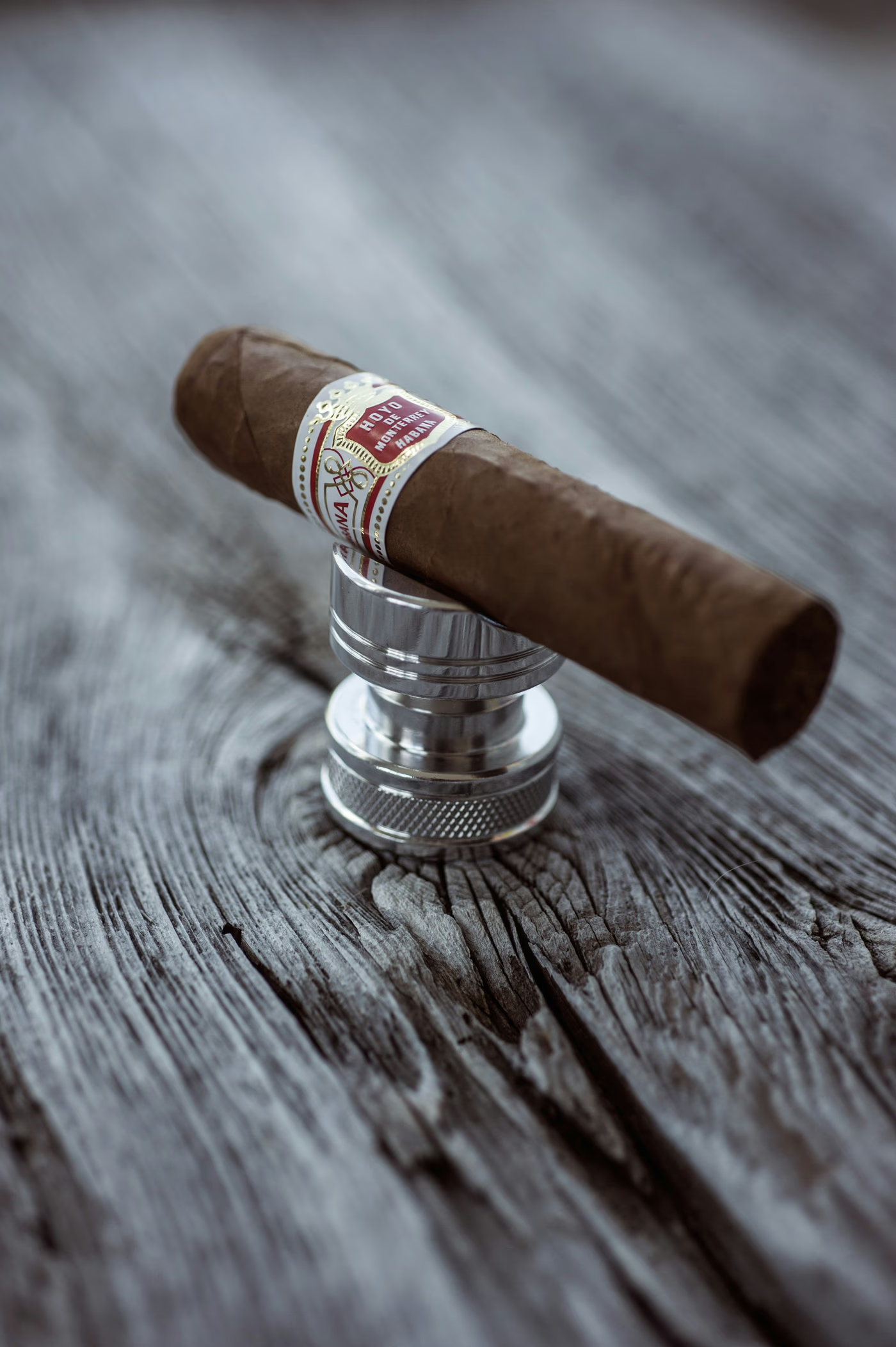
A premium cigar is rolled tobacco leaf smoked without a paper wrapper or filter, in contrast to a cigarette's shredded tobacco rolled in paper. Cigars are typically made almost entirely from whole or cut tobacco leaf -- wrapper, binder, and filler -- and are meant to be smoked slowly over anywhere from 20 minutes to well over an hour, rather than the few minutes a cigarette burns for. This page is educational: it explains construction, terminology, and format, not whether or how much to smoke.
How Cigars Are Made
The production process varies by manufacturer, tobacco type, and region; these are the general stages most premium cigars pass through.
- 1
Cultivation
Tobacco for cigars is grown from specific varietals bred for wrapper, binder, or filler use. Soil, climate, and shade all shape a leaf's eventual flavor and burn quality -- this is where a lot of a cigar's regional character originates, similar to how terroir affects other agricultural products.
- 2
Harvesting
Leaves are picked ("primed") in stages from the bottom of the plant upward as they ripen, over several weeks. Leaves from different positions on the plant -- lower, middle, upper -- have different characteristics and are often used for different parts of a blend.
- 3
Curing
Freshly picked leaves are hung in curing barns to dry over several weeks, converting starches to sugars and changing the leaf's color from green toward brown. Curing methods (air-curing is standard for cigar tobacco) vary by tobacco type and region.
- 4
Fermentation
Cured leaves are stacked in large piles ("pilones" or bulks) where heat and moisture drive fermentation, breaking down ammonia compounds and further developing flavor and aroma. Fermentation can happen in multiple rounds and take anywhere from weeks to months depending on the tobacco and the manufacturer's process.
- 5
Aging and Preparation
After fermentation, tobacco is often aged further -- sometimes for years -- to mellow and round out flavor before it's blended. Leaves are then sorted, and their central stem is typically removed ("stripped") in preparation for rolling.
- 6
Blending and Rolling
A blender selects specific wrapper, binder, and filler leaves to create a target flavor profile. Rollers then bunch the filler, apply the binder, and wrap the finished bunch in the wrapper leaf by hand (or, for machine-made cigars, with mechanical assistance) -- skilled hand-rolling is itself a specialized trade.
- 7
Quality Control
Finished cigars are typically checked for consistent weight, firmness, and draw, and often rested again before being banded and boxed. Standards and specific checks vary by manufacturer.
The Three Main Components
Every cigar is built from three layers of tobacco: the wrapper (the visible outer leaf), the binder (which holds the filler together), and the filler (the blended tobacco inside). Each plays a different role in how a cigar burns and tastes.
See the illustrated cigar anatomy →Cigar Sizes and Shapes
A cigar's size is described by its length and ring gauge (diameter in 64ths of an inch) together, and its overall profile falls into one of two broad shape families: straight-sided (parejo) or irregularly shaped (figurado).
Compare cigar formats →Strength vs. Flavor
Strength and flavor are two different things. Strength refers to a cigar's perceived nicotine intensity (informally described as mild, medium, or full); flavor refers to the taste and aroma characteristics a cigar presents, independent of how strong it is.
Read the Flavor & Strength guide →Cigar Terminology
Cigars come with their own vocabulary -- vitola, ring gauge, maduro, draw, and more -- most of which describes construction or format rather than taste.
Browse the Cigar Glossary →Cigar Storage
Because tobacco is sensitive to humidity, cigars are typically stored in a humidor -- a humidity-controlled box, cabinet, or room -- to keep them in good smoking condition over time.
Read the Storage & Humidor guide →Cigars are a tobacco product. This page explains how cigars are constructed and described -- it isn't health or usage guidance, and nothing here should be read as suggesting cigar use is risk-free.